We respect homeowners who fix things themselves, and plenty of garage door care belongs in your hands. But this is also a machine with parts under hundreds of pounds of tension, and the injury statistics are real. Here is an honest map of where DIY ends.
Safe and smart to DIY
- Lubricating hinges, springs, and roller bearings twice a year.
- Wiping and aligning safety sensor lenses.
- Replacing remote and keypad batteries, reprogramming remotes.
- Tightening visibly loose hinge bolts on a closed door.
- Washing the door and checking the weather seal.
Gray zone, know your limits
Replacing a bottom weather seal, swapping individual rollers on the vertical track section, and adjusting opener travel limits are manageable for experienced DIYers who work with the door closed and clamped. If any step requires loosening a cable or a spring component, stop.
Professional only, no exceptions
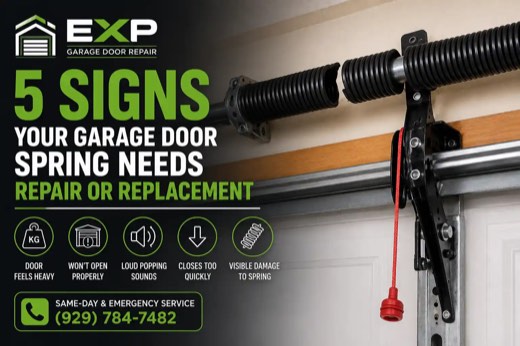
- Anything touching torsion or extension springs. The stored energy causes thousands of ER visits yearly.
- Lifting cables and cable drums, they are under the same tension as the springs.
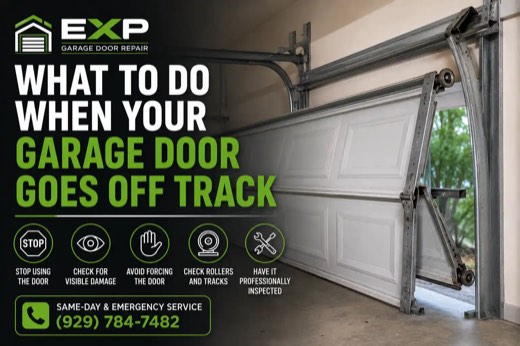
- A door that is off its tracks, it can fall without warning.
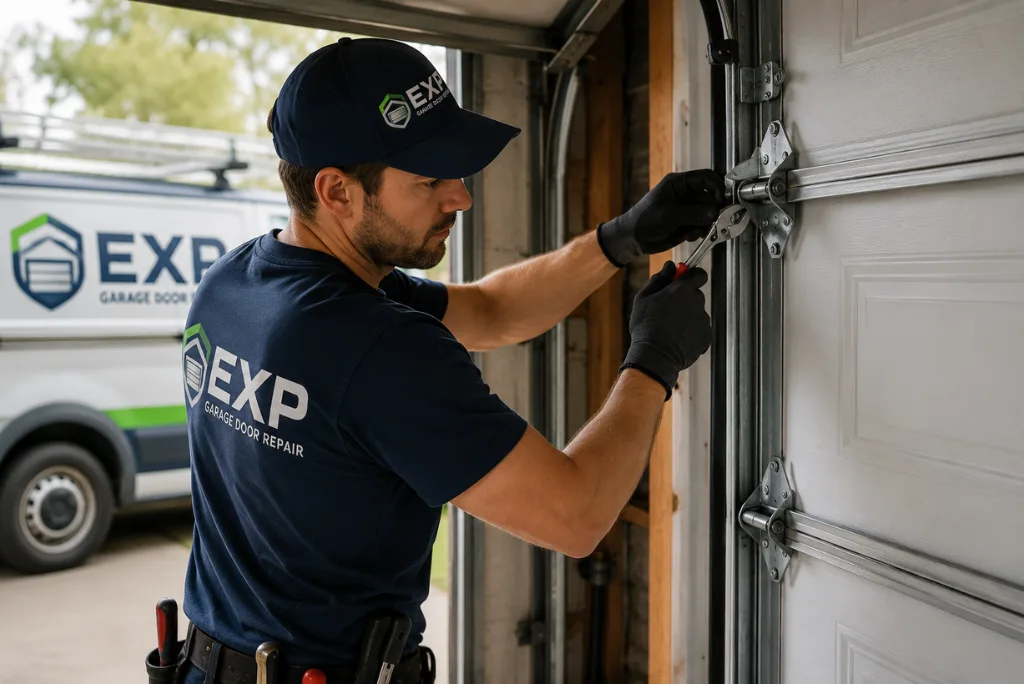
- Bottom bracket removal, those brackets anchor the loaded cables.
- Full door or opener installation, wrong spring matching creates a permanently dangerous door.
The math most people miss
Professional spring replacement costs a few hundred dollars. The tools to do it safely cost nearly as much, the parts are hard to source correctly, and a mistake risks your hands, your car, and the door itself. Some jobs are cheap insurance at the professional price.