Every January, the first hard freeze brings a wave of broken spring calls. Cold makes steel brittle, thickens old grease, and turns small existing problems into failures. An hour of preparation in the fall saves you a frozen morning with a dead door in the winter.
Replace tired weather seals now
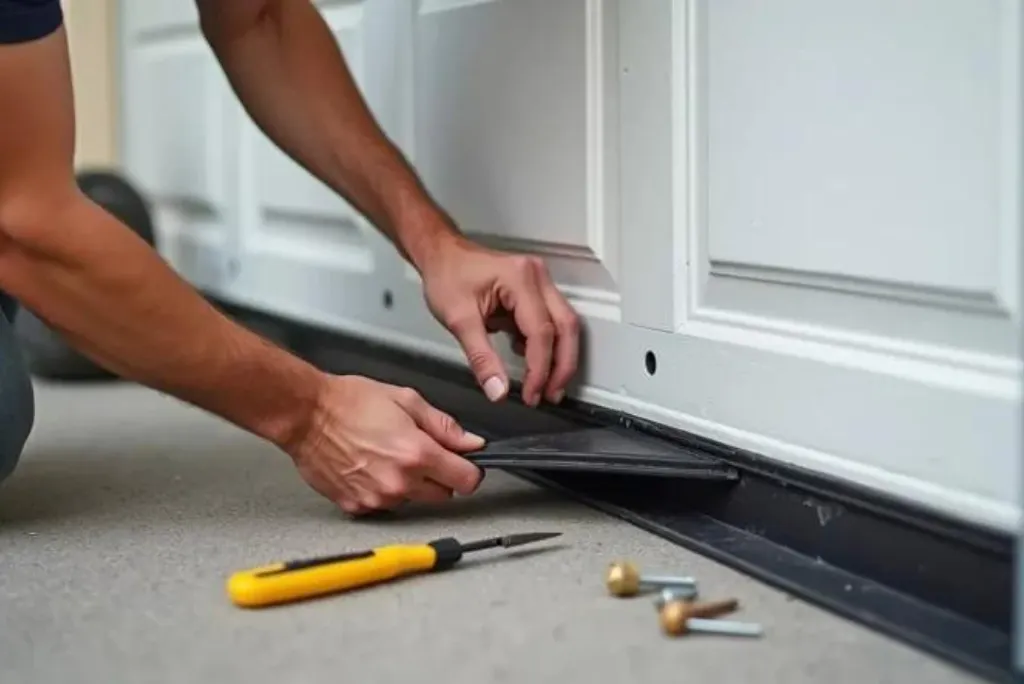
The bottom seal is your garage insulation front line. If you can see daylight under the closed door, snow, wind, and freezing air are coming in all season. Rubber replaced in fall stays flexible through winter, rubber replaced in January has already let a month of cold in.
Lubricate before the cold, not after
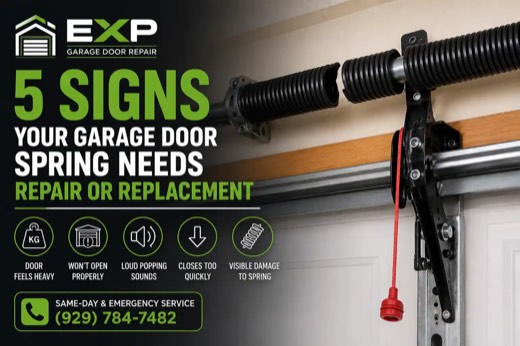
Old lubricant stiffens in freezing temperatures and makes the whole system drag. Apply a silicone or lithium garage door lubricant to springs, hinges, and roller bearings in late fall so everything moves freely when temperatures drop.
Test the door balance
Pull the release cord and lift the door halfway by hand. It should stay put. A door that drifts down is out of balance, and an out of balance door works its opener and springs hardest exactly when cold has already weakened them.
Watch the frost heave
Freeze and thaw cycles can shift the concrete slab under the tracks. If the door starts scraping or binding in winter, do not force it, track alignment is a quick professional adjustment.
Do not chip ice off a frozen seal
When a seal freezes to the slab, forcing the opener tears the rubber off the door. Break the ice bond gently along the bottom edge, or pour warm water and open immediately.