Every garage door is lifted by one of two spring systems, and knowing which one you have tells you a lot about how your door behaves, how it fails, and what a proper repair looks like.
Torsion springs: the modern standard
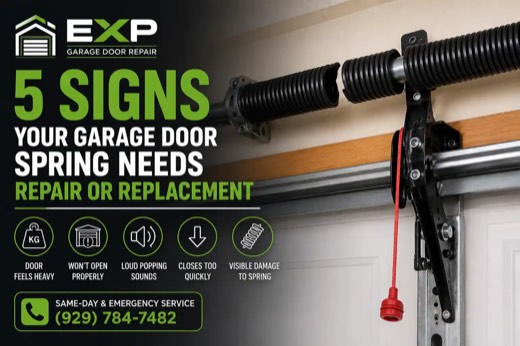
A torsion spring mounts on a steel shaft above the door opening and lifts the door by twisting. Torsion systems lift evenly from the center, run smoother, last longer, and when they break, the spring stays contained on its shaft. That containment is a major safety advantage. Nearly all doors installed in the last two decades use torsion springs.
Extension springs: the older system
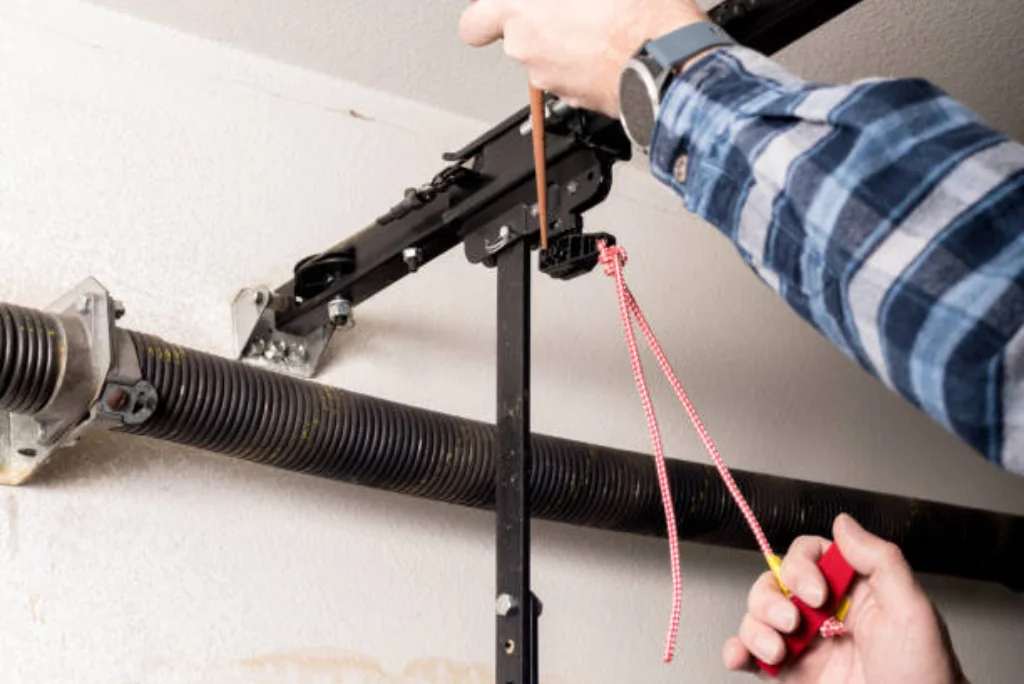
Extension springs stretch along the horizontal tracks on both sides of the door and lift by contracting. They take more vertical clearance headaches away, which is why very low headroom garages still use them. Their weaknesses: uneven lifting when one side wears faster, and a dangerous failure mode. A snapping extension spring can whip across the garage unless it has a safety cable running through it.
The one upgrade every extension system needs
If your door uses extension springs, look for a thin cable threaded through the center of each spring. That safety cable catches the spring if it snaps. If yours are missing, having them installed is inexpensive and genuinely important.
Which is better?
For almost every New Jersey home with standard headroom, torsion wins: smoother travel, double the typical lifespan, and safer failure. When we replace springs on an extension system with adequate clearance, we often recommend converting to torsion.